
Whole grain einkorn sourdough bread has become one of the most nourishing and healing foods in our home, but that was not always the case. For many years, I avoided gluten entirely after being diagnosed with ankylosing spondylitis and struggling with autoimmune flares, gut issues, and inflammation. Bread, especially wheat-based bread, was completely off the table.
Autoimmune healing has a way of encouraging curiosity and growth. So about a year ago, after a lot of research, I began experimenting with whole grain einkorn sourdough.
To my surprise, my body responded beautifully.

Now, whole grain einkorn sourdough is a weekly staple in our home and a large part of my anti-inflammatory diet. It is nourishing, gentle on digestion, and supports my healing. In this post, I’m sharing the exact recipe and method I use to make a whole grain einkorn sourdough boule, along with tips and things I’ve learned along the way.
In two upcoming posts, I’ll be sharing: • How to make a whole grain einkorn sourdough starter from scratch • My personal experience tolerating einkorn sourdough after years of being gluten‑free, and why modern wheat is so different and hard for our bodies to tolerate.
If you are interested in more gut-healing, anti-inflammatory, from-scratch recipes, I think you will love my instant pot bone broth recipe as well as my dairy-free cream of mushroom recipe.
My Journey With Whole Grain Einkorn After Going Gluten-Free:
After nearly a decade of being gluten‑free, reintroducing wheat was intimidating. What I’ve learned, both personally and through research, is that gluten itself isn’t always the root issue (unless you’re celiac). Instead, it’s the modern processing of wheat: hybridization, excessive refining (removing the bran & germ), chemical treatments, synthetic enrichments, and a lack of fermentation that causes problems in our gut and often triggers an autoimmune inflammatory response.
Einkorn is an ancient grain that has never been hybridized. When it’s used whole grain and slow‑fermented through sourdough, the structure of the gluten is transformed, phytic acid is reduced, and the bread becomes far more digestible and the nutrients easier to absorb.
I’ve now been eating homemade whole grain einkorn sourdough consistently for over a year, and it has felt supportive and healing rather than inflammatory, something I never imagined saying about bread.
Why Whole Grain Einkorn Sourdough is More Healing:
This loaf isn’t just about being able to tolerate bread, it’s about more nourishment and health.
Benefits of whole grain einkorn sourdough:
- Natural fermentation supports a healthy gut microbiome
- Rich in fiber and protein to support blood sugar balance
- Contains natural B vitamins, iron, magnesium, and antioxidants
- Sourdough fermentation helps reduce phytic acid, improving mineral absorption
- Einkorn’s simpler gluten structure is often easier to tolerate
Using true whole grain einkorn flour is key. Many store‑bought breads labeled “whole grain” contain only a small percentage of whole grain flour, with the rest being refined, that is something that can contribute to inflammation and digestive problems.
Before You Begin: Sourdough Starter:
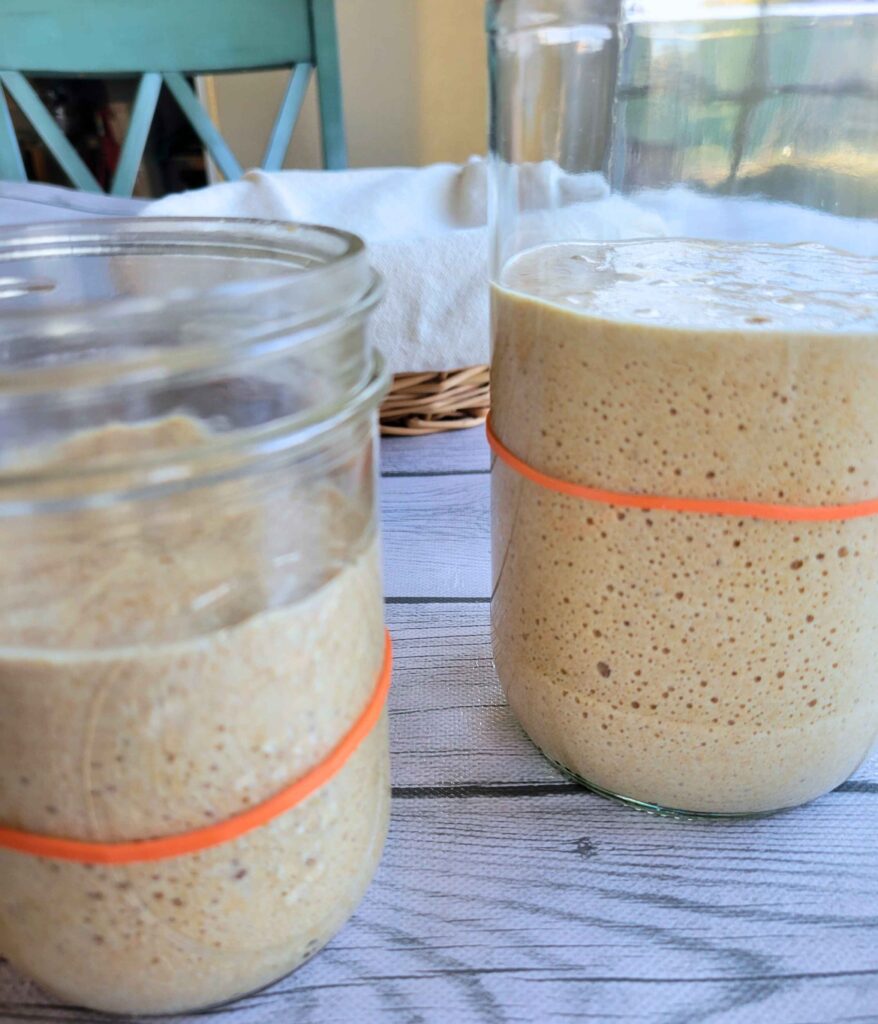
To make this loaf, you’ll need a whole grain einkorn sourdough starter.
If you already maintain an active starter, you can use it directly. I personally keep my starter in the refrigerator for a low‑maintenance rhythm, so I make a levain each time I bake bread. I’ll be sharing a full sourdough starter tutorial soon.
Helpful Equipment:
You don’t need all the fancy sourdough kitchen tools to make great bread. These are the tools I find most helpful:
- Kitchen scale (this recipe uses weight)
- Dutch oven (for baking)
- Pie weights (optional, helps prevent burning)
- Bread lame or razor blade (for scoring)
Common kitchen items:
- Large glass mixing bowl
- Spatula
- Thin cotton kitchen towel
- Unbleached parchment paper
A basket or small bowl lined with a towel works just as well as a sourdough banneton. I used a glass bowl lined with a towel for a long time.
Ingredients:
- 300 grams filtered water (room temperature)
- 150-200 grams active whole grain einkorn sourdough starter
- OR levain made from inactive starter (instructions below)
- 510 grams whole grain einkorn flour
- 10-12 grams Himalayan pink salt (or sea salt)
Whenever possible, choose organic, non-GMO whole grain einkorn flour. Organic einkorn is grown without glyphosate and other chemical herbicides, helping preserve the grain’s natural nutrients and making it a better choice for gut health and overall wellness.
Planning Note: Making whole grain einkorn sourdough bread is a 2–3 day process due to the slow, natural fermentation times. Be sure to plan ahead so your dough is ready to bake when you want fresh bread.
How to Make a Whole Grain Einkorn Sourdough Boule:
Step 1: Make the Levain (If Needed)
Skip this step if using an active starter.
You’ll need:
- 30–40 g inactive einkorn starter
- 60–80 g whole grain einkorn flour
- 60–80 g filtered water
*NOTE: The ratio for the above ingredients should be 1 part starter, 2 parts flour, and 2 parts water.
Stir everything together in a glass jar until it resembles thick pancake batter. Cover loosely and let ferment until doubled and bubbly (8–12 hours). A warm spot will speed this up.

Step 2: Mix the Dough
Add the water and levain (or active starter) to a large bowl.
Stir until mostly dissolved.

Add the whole grain einkorn flour and salt.
Use a spatula to mix, fold, and gently kneed until a shaggy dough forms and all the flour is incorporated. Be careful not to over-mix the dough.

Cover with a wet towel and let rest 60–90 minutes (this allows the flour to hydrate).
Step 3: Stretch and Fold (4 rounds)
Wet your hands to prevent sticking.
- Gently stretch one side of the dough up and fold it over itself.
- Be careful not to tear the dough. The first round or two, the dough will not be very stretchy.

- Turn the bowl ¼ turn and repeat until all sides are stretched and folded.
- Cover and rest 30 minutes.
Repeat for a total of 4 stretch‑and‑fold rounds.
After the final round, let the dough rest 15 minutes.
Step 4: Shape the Boule
Wet your hands and invert the dough out onto the counter. You will need to use your hands to loosen it from sticking to the bowl.
Lightly flour the surface of the dough.
Using both hands, gently push the dough away, then drag it back toward you with a slight circular motion to build surface tension.

Repeat until the dough is round and taut on top.
Place seam‑side up (the side that was against the counter up) into a floured cloth lined basket or towel‑lined bowl. Cover and rest 2–3 hours at room temperature, then refrigerate overnight (12–24 hours).
Step 5: Bake Your Whole Grain Einkorn Sourdough Boule:
Preheat oven and Dutch oven to 450°F.
Add pie weights in the bottom of your dutch oven if using.
Invert chilled dough onto unbleached parchment paper.
Use a blade to score the top of the boule deeply (about ¼ inch).
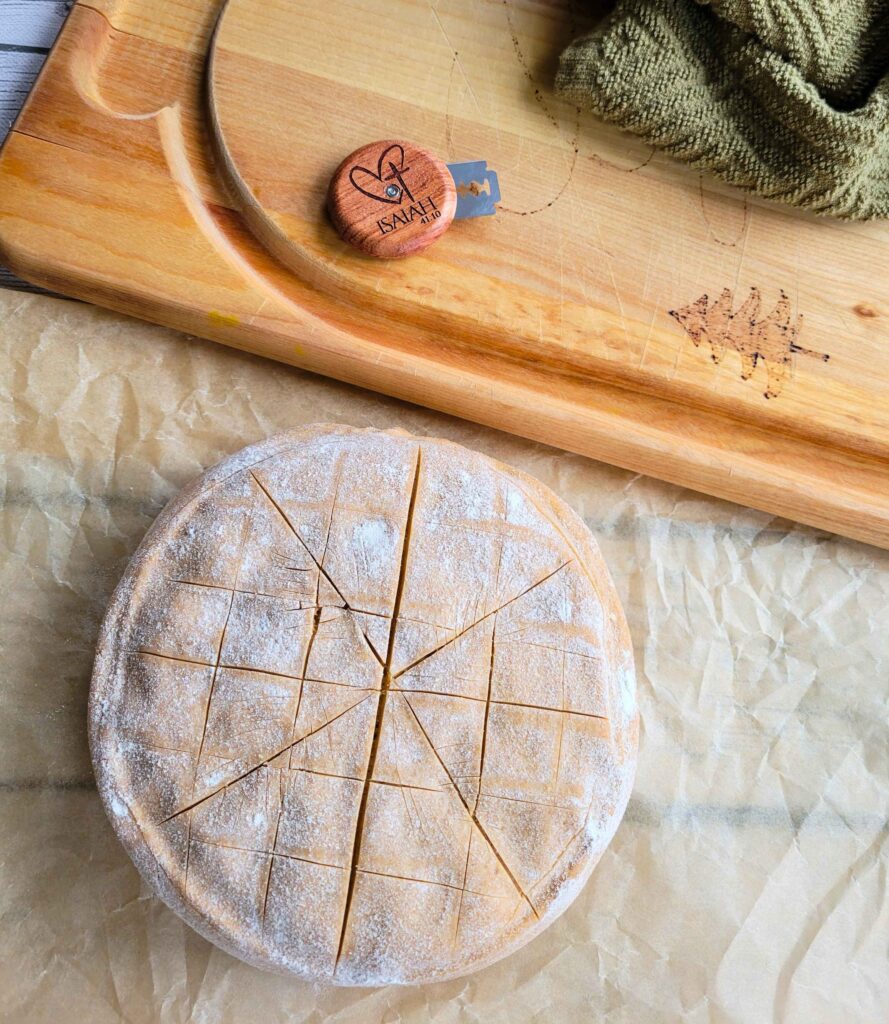
Place the sourdough boule with the parchment paper on the pie weights in the dutch oven.
Bake covered for 30 minutes.
Remove lid and bake 18–20 minutes more.
Cool completely before slicing.
Helpful Tips for Baking Whole Grain Einkorn Sourdough:
Use pie weights in your Dutch oven to help prevent the bottom of the loaf from burning or becoming overly crisp.
Work with wet hands when handling einkorn dough. Einkorn has a naturally stickier texture than modern wheat, and wet hands make stretching, folding, and shaping much easier.
Don’t wash sourdough starter down the sink. Discard excess starter into the trash—once it dries, it hardens like cement and can clog pipes.
Don’t overthink scoring. Whole grain einkorn sourdough often cracks and opens beautifully on its own during baking, creating a rustic, natural design.
Expect a darker, denser loaf. Whole grain einkorn sourdough bread is more flavorful and hearty than white sourdough or store-bought bread. It won’t be light and airy and that’s the point, it is nutrient dense and full of rich flavor. One of the many reasons we love it!
Storage + Freezing Tips:
To keep your whole grain einkorn sourdough bread fresh and flavorful:
- Store the cooled loaf in a beeswax bread bag or wrapped loosely in a thin cotton towel.
- Avoid airtight storage at room temperature, which can trap moisture and lead to mold or a gummy texture.
- I don’t recommend storing sourdough in the refrigerator, as it can dry out the bread and negatively affect texture.
- Freezing works beautifully.
- Allow the loaf to cool completely before freezing.
- Store in an airtight container or bag in the freezer.
- When ready to thaw, remove from the container and let it thaw wrapped in a towel at room temperature. This prevents condensation and sogginess.
Frequently Asked Questions About Whole Grain Einkorn Sourdough Bread:
Why is my whole grain einkorn sourdough bread gummy or chewy?
A gummy or overly chewy texture is usually caused by one (or more) of the following:
- Underbaking: Einkorn sourdough needs to bake fully. The internal temperature should reach about 205–210°F. Using a thermometer can be very helpful when you’re learning your oven times as they may vary slightly from my suggested bake times.
- Too much moisture: Einkorn absorbs water differently than modern wheat. Try slightly reducing the water or adding a small amount of extra flour next time.
- Slicing too soon: Cutting into the bread before it has fully cooled creates a gummy texture. Always allow the loaf to cool completely before slicing.
Can I over-ferment whole grain einkorn sourdough?
Yes—einkorn has a weaker gluten structure than modern wheat, so it can over-ferment more easily. If your dough spreads too much or feels very slack, shortening the bulk fermentation time or the final proof time at room temperature can help.

A Note on Timing, Environment, and Grace:
Sourdough is ‘alive’ (a live culture of wild yeast, water, and flour) and because of that, it can behave differently depending on your environment. Factors like temperature, humidity, elevation, and even the natural yeast and bacteria in your home can influence fermentation times and dough behavior.
I’ve found this whole grain einkorn sourdough recipe to be fairly forgiving, even when I don’t follow the timing or measurements perfectly. Aim to stay close to the guidelines, but trust your dough more than the clock.
Sourdough baking is a journey. You’ll learn so much as you go, and I’m always happy to help troubleshoot based on what I’ve learned. Please don’t hesitate to reach out with questions.

Whole Grain Einkorn Sourdough Bread Boule
Ingredients
- 300 grams filtered water room temperature
- 150-200 grams active whole grain einkorn sourdough starter OR levain made from inactive starter (instructions below)
- 510 grams whole grain einkorn flour
- 10-12 grams Himalayan pink salt or sea salt
Instructions
Make the Levain (Skip this step if using active starter):
- In a glass jar, stir together 30–40 g inactive einkorn starter, 60–80 g whole grain einkorn flour, and 60–80 g filtered water.
- *NOTE: The ratio for the above ingredients should be 1 part starter, 2 parts flour, and 2 parts water.
- Cover loosely and let ferment until doubled and bubbly (8–12 hours). A warm spot will speed this up.
Mix the Dough:
- Add the water and levain (or active starter) to a large bowl.
- Stir until mostly dissolved.
- Add the whole grain einkorn flour and salt.
- Use a spatula to mix, fold, and gently kneed until a shaggy dough forms and all the flour is incorporated. Be careful not to over-mix the dough.
- Cover with a wet towel and let rest 60–90 minutes (this allows the flour to hydrate).
Stretch and Fold (4 rounds):
- Wet your hands to prevent sticking.
- Gently stretch one side of the dough up and fold it over itself. Be careful not to tear the dough. The first round or two, the dough will not be very stretchy.
- Turn the bowl ¼ turn and repeat until all sides are stretched and folded.
- Cover and rest 30 minutes.
- Repeat for a total of 4 stretch‑and‑fold rounds.
- After the final round, let the dough rest 15 minutes.
Shape the Boule + Final Proof:
- Wet your hands and invert the dough out onto the counter. You will need to use your hands to loosen it from sticking to the bowl.
- Lightly flour the surface of the dough.
- Gently push dough away, then pull it back toward you with a slight circular motion to build surface tension.
- Repeat until the dough is round and taut on top.
- Place seam‑side (the side that was against the counter) up into a floured cloth lined basket or towel‑lined bowl. Cover and rest 2–3 hours at room temperature, then refrigerate overnight (12–24 hours).
Bake Your Whole Grain Einkorn Sourdough Boule:
- Preheat oven and Dutch oven to 450°F.
- Add pie weights in the bottom of your dutch oven if using.
- Invert chilled dough onto unbleached parchment paper.
- Use a blade to score the top of the boule deeply (about ¼ inch).
- Place the sourdough boule with the parchment paper on the pie weights in the dutch oven.
- Bake covered for 30 minutes.
- Remove lid and bake 18–20 minutes more.
- Cool completely before slicing.
Notes
Baking whole grain einkorn sourdough bread is more than just making homemade bread—it’s returning to traditional food preparation that supports gut health, digestion, and overall wellness. Ancient grain einkorn, combined with sourdough fermentation, creates a loaf that is nourishing and better tolerated than modern wheat bread.
If you’re learning how to bake with einkorn or exploring sourdough as part of a healing or anti-inflammatory lifestyle, this recipe is a wonderful place to begin. Be sure to check back soon for my upcoming posts on making a whole grain einkorn sourdough starter and the science behind my personal experience successfully reintroducing einkorn after years of being gluten-free.
If you try this recipe, leave a comment below or share it with someone who’s on a similar journey.
Pin this Whole Grain Einkorn Sourdough Boule Recipe for Later:


Thank you for the straight-forward guide. That einkorn can be quite the tricky grain.
This looks fabulous! I love your recipe, it sounds easy enough and the steps are easy to follow. Thanks for a great recipe!
Anxious to try this. Thank you for sharing.
I am saving this to try! Looks beautiful and we try to stick to lower gluten and sourdough, this is perfect.
What a great recipe, love einkorn!!
Yum! Fantastic recipe!
Yum! Fantastic recipe!
Thank you for this detailed step-by-step guide – this boule looks amazing!
I think this post is especially timely right now, as many people are seeking anti-inflammatory meals.
That is the most beautiful whole wheat einkorn boule I’ve ever seen! So much helpful information in this post!
My loaf didn’t rise like the picture. I’m not sure why?🤷♂️
I’m so sorry your loaf didn’t rise as much. Did you use a mature active starter?
I’d be happy to help you trouble shoot why it didn’t rise as much, shoot me an email kim@thispurelyjoyfullife.com